


Articles
Total Articles : 118
Expanding the Fronts as a Survival Strategy: Iran between the Gulf and the Caucasus
Expanding the Fronts as a Survival Strategy: Iran between the Gulf and the Caucasus
On 28 February 2026, war broke out between the United States, Israel, and Iran — a war the Arab Gulf states had worked hard to prevent. Oman's quiet mediation had helped prepare the ground for direct American–Iranian talks, but when negotiations collapsed, all of it came to nothing. The war began, and its opening day claimed the life of Iran's Supreme Leader Ali Khamenei — a development that threw an already volatile situation into deeper uncertainty.
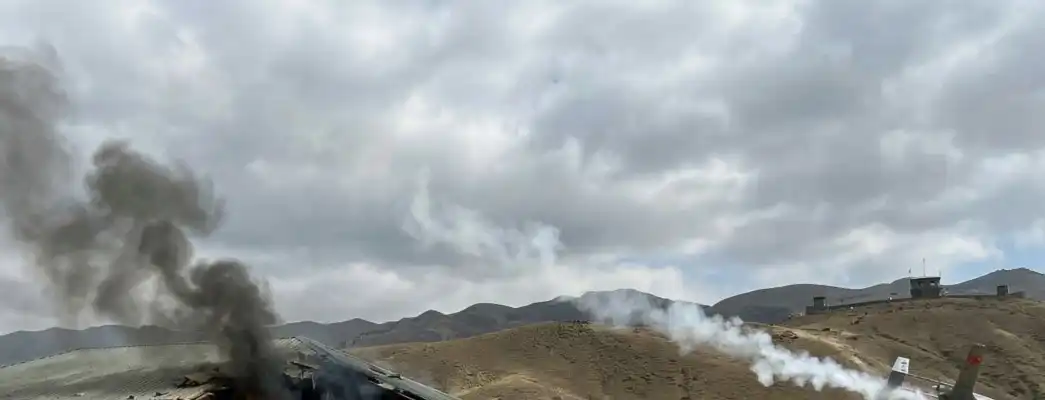
Despite the Gulf states' role as mediators, Iranian missiles and drones struck them indiscriminately, hitting every single one. The strikes went further still, reaching Azerbaijan in the South Caucasus — a country with no part in the war and no history of launching attacks on Iran from its soil. Despite their ideological and political differences, Azerbaijan has consistently pursued a policy of cooperation with its neighbors, including Iran, wherever possible, making the strikes harder still to explain. The conduct was reckless enough to raise a genuine question: was this the execution of a deliberate strategy, or had the chain of command simply broken down? Iranian officials only deepened the confusion, with some dismissing the strikes as fabrications and others admitting the leadership could no longer control certain factions within the Revolutionary Guards.
Strategic Objectives and the Margins for Negotiation
Predicting where this war leads is, for now, closer to guesswork than analysis. One approach, however, may prove more useful than most: identifying what each party considers an acceptable outcome, and where it will not bend.
Washington's position is laid out in the National Security Strategy of December 2025 and the Department of Defense's strategic document for 2026, both of which place China at the top of America's priorities. In that context, Iran carries real strategic significance — its coastline runs along both the Gulf and the Caspian, it sits astride the South Caucasus and Central Asia, it holds enormous hydrocarbon reserves, and China draws a substantial share of its oil imports from Iranian sources. Trump has stated his aims plainly on multiple occasions: a new Iranian order that secures Israel and falls in line with American interests. He has been equally plain that toppling the regime is not his goal — a position Marco Rubio has echoed. Trump has gone so far as to say that it is he who will determine who governs Iran.
Israel — the second party to this war, and by most readings its primary instigator — appears, on the basis of statements by Prime Minister Benjamin Netanyahu and President Isaac Herzog, to be pursuing something more far-reaching: the removal of the Iranian regime and a fundamental reshaping of the Middle East.
Iran's calculus is different in kind. The new leadership, now embodied in Mojtaba Khamenei following his election as Supreme Leader, faces a defining constraint: keeping the Islamic Republic intact is the non-negotiable first principle. But survival alone is not enough — it must not look like capitulation. A leadership that comes to power in the shadow of war, and appears to have surrendered, would forfeit its legitimacy before it had properly begun.
The three positions, laid side by side, describe something close to a zero-sum confrontation, where the room for a negotiated exit is vanishingly small. The war is likely to be long, and it is unlikely to end the way the twelve-day conflict of June 2025 did — though all scenarios remain on the table, not least given Trump's concern that a prolonged conflict could weigh on his party's prospects in the November midterm congressional elections.
Iranian Motives Behind the Strikes on the Gulf and the Caucasus
With its military reach diminished and its proxy network across the Arab world largely cut away, the Iranian regime appears to be falling back on a contingency strategy — one worked out with Khamenei before his death — whose aim is not merely regional disruption but something more ambitious: manufactured chaos on a global scale. The logic breaks down into four distinct lines of effort.
The first is psychological: to spread fear across the Gulf and Azerbaijan, and to shatter the image of prosperous, stable neighbors that many Iranians have long measured their own conditions against. The contrast is a painful one — societies at peace and living well, while Iranians endure poverty and sanctions in a country that sits on vast natural wealth.
The second is economic: to push energy prices high enough to tip the global economy into crisis. With Russian supply already squeezed by sanctions and American alternatives more expensive, the aim is to generate the kind of economic shock that translates into political instability across Europe.
The third is domestic American: to drive up inflation inside the United States and make the political cost of continuing the war high enough that Trump reconsiders, with the midterm congressional elections in November concentrating minds in Washington.
The fourth is a warning — or perhaps a threat. The fall of the Islamic Republic, this strategy signals, will not be a contained event. It will pull others down in its wake. The image is that of Samson, who destroyed the temple and everyone in it before he died.
The strikes on Azerbaijan carry their own particular logic. The regime knows that its collapse could ignite Azerbaijani nationalism among the ethnic Azerbaijani majority in north-western Iran — a population separated from the Republic of Azerbaijan by nothing more than the Aras River, and connected to it by shared ethnicity, religion, culture, and history.
This is not to suggest that the Republic of Azerbaijan harbors territorial ambitions. But such dynamics could emerge spontaneously, driven by those deep commonalities and by the pull of the Azerbaijani model itself: a secular republic, tolerant of different faiths, denominations, and ethnicities, economically prosperous, with strong ties across the United States, Russia, China, Europe, the Arab world, Turkey, Pakistan, and the Central Asian states — and one that has cultivated a stable relationship with Georgia and is committed to reaching a comprehensive and final peace settlement with Armenia.
Azerbaijan has also recovered its occupied territories from Armenia in successive stages, through a hybrid and calculated approach that combined three decades of commitment to peaceful negotiations with the measured use of hard power once it became clear that diplomacy alone would not restore its rights — ultimately compelling both the Armenian leadership and the international community to recognize them.
Together, these factors make Azerbaijan a counter-model to the Iranian regime — one it finds no easier to accept than the prosperous Arab Gulf states across the water.
Conclusion
The Iranian regime is in a fight for its life, and there is little that appears capable of stopping it. This is what ideologically driven Islamist systems do when cornered: they set about destroying what surrounds them, because they cannot live alongside successful alternatives — states that manage to give their people security and a decent life.
The picture is made darker by reports that the new Supreme Leader, Mojtaba Khamenei, holds a political Mahdist worldview — and if those reports prove accurate, it would hand the hardliners within the regime a powerful justification for escalation, one rooted in an end-times vision that keeps followers, inside Iran and beyond, primed for confrontation rather than compromise. The same charged atmosphere is giving new momentum to radical Sunni Islamism and its caliphate project, which moderate Arab states had long fought firmly and resolutely to counter. The risk of a new wave of extremism and terrorism is real, and it should not be understated.
Tehran also sees the ground shifting beneath its feet in the South Caucasus — a region it has long regarded as its own historical sphere of influence. Azerbaijan's growing political and economic weight, and its expanding role in new global trade corridors, chief among them the Trans-Caspian International Transport Route, are steadily eroding that position.
The restoration of Azerbaijani territorial contiguity for the first time since independence — through the Trump Peace and Prosperity Corridor — alongside direct connectivity with Turkey, has further strengthened Azerbaijan's geopolitical standing. So too have its deepening ties with the Arab world in general, and with the Arab Gulf states in particular.
A final peace settlement with Armenia would open the door to wider cooperation and economic partnerships, potentially making the region one of the world's most significant trade hubs — with Azerbaijan at its center.
These achievements are a source of clear concern for hardline factions within Iran, who have their own reasons, beyond those already discussed, for seeking to destabilize Azerbaijan and obstruct this trajectory. That behavior is unlikely to stop as long as the current regime survives — a situation that calls for a more calibrated approach, drawing on Azerbaijan's broad network of regional and international relationships and its growing influence to meet the challenges ahead.
One final calculation seems to be at work in Tehran: that even if the regime falls, what comes after will not be quiet. Its remnants will scatter and keep causing damage — a dynamic the region has seen before, in Iraq after Saddam.
Ahmed Dahshan
Researcher in history and international relations, specializing in Russian and Eurasian affairs.